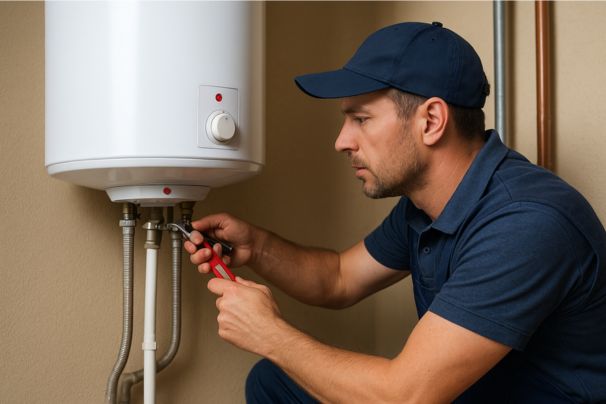

Few home problems feel as inconvenient as stepping into a warm shower that turns icy without warning. If your water heater suddenly refuses to heat, it’s usually not a mystery—just a handful of common issues that need attention. Before calling a technician, it helps to understand what might be going wrong. Many of these issues are easy to diagnose, and some may require professional water heater repair to avoid bigger trouble later.
Whether you rely on an electric or gas heater, both systems follow similar heating principles: they warm water to a set temperature and store it. When that system breaks down, you feel it instantly. Let’s break down the most common reasons your heater stops heating and what can be done about them.
Common Reasons Your Water Heater Stops Heating
1. Faulty Thermostat
The thermostat acts like the “brain” of your water heater. If it fails, the heater doesn’t know what temperature to aim for, and it simply stops heating. Most modern heaters allow temperature adjustments, but if changing the temperature doesn’t work, the thermostat may need replacement.
- Sudden drop in hot water temperature
- Water becomes dangerously too hot or too cold
- Heater runs longer than usual
According to data referenced by the U.S. Department of Energy (energy.gov), heating water can account for 14–18% of total household energy consumption. That means a faulty thermostat not only ruins comfort but wastes electricity too.
2. Sediment Buildup Inside the Tank
Water naturally contains minerals like calcium and magnesium. Over time, these minerals settle at the bottom of the heater and form thick sediment layers. This blocks the heating element or burner flame, forcing your heater to work harder and heat less.
You might notice:
- Rumbling or popping noises from the tank
- Water taking longer to get hot
- Higher energy bills
Routine flushing of the tank once a year can prevent this issue—a service many professional plumbers include in maintenance packages.
Also Read: 5 Expensive Mistakes You Should Never Make During Tub Repair
3. Heating Element or Burner Failure
Electric heaters use heating elements, while gas heaters use burner flames. If either fails, there’s simply no heat source to warm the water. A burned-out heating element is one of the most common electric water heater failures, typically caused by sediment, overheating, or age.
Gas systems sometimes fail because of issues with the thermocouple, burner clogging, or dust buildup. A quick professional cleaning can sometimes fix the problem, similar to how routine servicing of ACs like 24 hour ac repair Dubai services keeps them running efficiently.
4. Tripped Breaker or Power Supply Issues
Your heater may simply not be getting power. For electric heaters, a tripped breaker is a common culprit. Resetting it might solve the issue, but repeated tripping often signals a deeper electrical problem. Gas heaters may suffer from faulty ignition or gas supply disruptions.
- Check your electrical panel for tripped breakers.
- Inspect the reset button on the heater.
- If the problem repeats—call a professional.
5. Leaks Reducing Heating Efficiency
Leaks don’t just waste water—they drastically reduce heating capability. Even a small leak disrupts pressure, making heating less effective. If the leak originates near valves or pipe joints, it can sometimes be repaired without replacing the tank. However, leaks at the bottom of the tank often mean the unit has rusted from within and needs replacement.
A minor leak is a big warning sign—just like a faulty home fixture needing door lock repair Dubai services. Small damage today can become a huge hassle tomorrow.
Expert Tips to Extend Your Water Heater’s Life
- Flush the tank once per year to remove mineral buildup.
- Check thermostat settings every few months (120°F is ideal).
- Replace anode rods every 3–5 years (they prevent internal rust).
- Schedule yearly professional inspections and basic maintenance.
Simple preventive measures can add years to your heater’s life, lower electricity bills, and ensure consistent hot water supply.
FAQ: Water Heater Heating Problems
1. Why does my water heater only give lukewarm water?
It’s often due to thermostat issues, sediment buildup, or a partially failing heating element.
2. How often should I flush my hot water tank?
Once a year is recommended—especially in areas with hard water.
3. Is it dangerous if my heater makes popping sounds?
Not immediately, but it means sediment buildup is causing overheating and needs cleaning.
4. Should I repair or replace a leaking water heater?
Valve or joint leaks can be repaired. Bottom tank leaks usually require replacement.
Final Thoughts
Water heaters rarely stop working without a reason. From thermostat failures to sediment buildup, most causes are predictable and fixable. Understanding them helps you respond quickly and save money in the long run. However, if the heater repeatedly fails, don’t ignore it—professional servicing ensures safety, efficiency, and peace of mind.
Also Read: Top-Rated Plumbing Services in Dubai: What Sets Them Apart
Blog Development Credits
This blog was a team effort fueled by smart ideas. Mohammad Rashid picked the topic. Most content was crafted using tools like ChatGPT and Google Gemini. The Digital Piloto team polished and optimized the blog to ensure it’s clear, engaging, and SEO-friendly.