
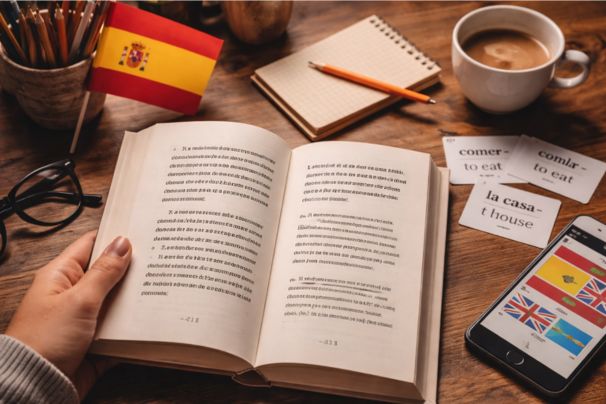

Have you ever noticed how some people seem to “pick up” Spanish naturally, while others struggle despite years of study? Often, the difference isn’t talent—it’s method. Reading Spanish stories alongside English translations has quietly become one of the most effective ways to build real fluency, especially for learners who want to understand, not just memorize.
That’s why Spanish Stories with English Translation are gaining so much attention. They offer context, emotion, and meaning—three ingredients traditional textbooks often miss.
Why Stories Work Better Than Isolated Lessons
Language wasn’t invented in bullet points or grammar charts. It evolved through storytelling—people sharing experiences, emotions, and ideas. When you learn Spanish through stories, your brain processes the language as communication, not as a puzzle to solve.
Research from the U.S. National Institutes of Health suggests that reading narrative text activates multiple areas of the brain simultaneously, improving comprehension and retention. In simpler terms, stories help your brain “connect the dots” faster than drills ever could.
Also Read: Stephen Krashen and Spanish Acquisition
Context Makes Vocabulary Stick
Seeing a word in a story gives it a personality. Instead of memorizing that correr means “to run,” you watch a character run late for work, feel their urgency, and understand the verb naturally. The English translation supports this process without interrupting it.
- Words appear in realistic situations
- Meanings are reinforced through repetition
- You learn how vocabulary is actually used
How English Translation Accelerates Fluency
Some learners worry that using English translations will slow them down. In reality, it often does the opposite—when used correctly. A well-designed bilingual story lets you glance at English only when needed, preventing frustration and keeping momentum high.
This approach mirrors how many linguists recommend learning languages: understand first, then refine accuracy. That’s why many modern Spanish Lessons Online now include story-based content instead of relying solely on grammar exercises.
Grammar Without the Headache
Stories quietly teach grammar patterns without formal explanations. Verb tenses, sentence structure, and word order all become familiar through exposure. Over time, you start recognizing what “sounds right” in Spanish—an essential step toward fluency.
Fluency Is Built Through Consistency, Not Perfection
Fluency isn’t about never making mistakes. It’s about understanding quickly and responding confidently. Reading short Spanish stories regularly—even 10–15 minutes a day—creates steady progress without burnout.
Many learners find that starting with a small commitment, like a free 4-story pack, removes the pressure. You’re not “studying”—you’re simply reading and enjoying the process.
- Short stories fit into busy schedules
- Progress feels natural, not forced
- Confidence grows with every finished story
Why This Method Works for All Levels
Beginners benefit from clear translations that prevent confusion. Intermediate learners refine vocabulary and grammar instinctively. Advanced learners improve flow, tone, and cultural understanding. Stories meet you where you are—and move you forward.
According to language acquisition research shared by universities like Stanford.edu, repeated exposure to meaningful input is one of the strongest predictors of fluency. Stories deliver exactly that.
Cultural Fluency Comes Along for Free
Language is culture. Spanish stories often include customs, humor, and everyday situations that textbooks overlook. This cultural familiarity helps you sound more natural and understand native speakers more easily.
FAQs
Do Spanish stories really help with speaking fluency?
Yes. While stories focus on reading, they improve sentence structure, vocabulary recall, and comprehension—key foundations for confident speaking.
Should I read the English translation first or Spanish?
Start with Spanish. Use the English translation only when needed. This keeps your brain focused on Spanish while avoiding frustration.
How often should I read Spanish stories?
Daily is ideal, even in short sessions. Consistency matters more than duration when building fluency.
Are bilingual stories better than grammar books?
They serve different purposes. Grammar books explain rules, but stories show how the language lives and breathes.
Final Thoughts
Fluency doesn’t come from forcing yourself through endless exercises. It grows through understanding, repetition, and enjoyment. Spanish stories with English translation offer all three—making them one of the most human, effective ways to truly master the language.
If you want Spanish to feel natural instead of stressful, stories might just be the missing piece.
Also Read: Starting Spanish with Your Ears, Not a Textbook
Blog Development Credits
This blog was a team effort fueled by smart ideas. Dual Language Stories picked the topic. Most content was crafted using tools like ChatGPT and Google Gemini.