
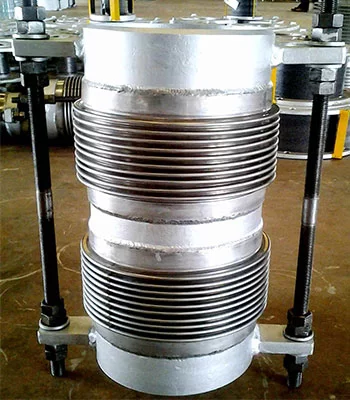

High temperatures don’t just test pipeline materials; they quietly test engineering judgment. In India’s refineries, power plants, and long-distance pipelines, heat causes pipes to expand—not only lengthwise, but sideways too. This lateral expansion is subtle, often underestimated, and yet one of the most common reasons pipelines lose stability when temperatures soar.
In many industrial setups, uncontrolled sideways movement can introduce stress at anchors, supports, and joints. That’s exactly why components like a lateral expansion bellow have become a practical necessity rather than a design luxury.
Understanding Lateral Expansion in Simple Terms
Most engineers are trained to think about axial expansion first—the pipe getting longer as it heats up. Lateral expansion, however, is what happens when that same pipe bends or shifts sideways because it’s constrained at multiple points. Think of a steel ruler heated unevenly while clamped at both ends; it doesn’t just stretch—it bows.
In Indian operating conditions, where ambient temperatures, solar radiation, and process heat often combine, this sideways movement becomes more pronounced. According to the U.S. Department of Energy, thermal expansion stress is one of the leading contributors to mechanical fatigue in high-temperature piping systems (energy.gov).
Why High Temperatures Amplify Stability Risks?
At elevated temperatures, metal loses stiffness while expansion forces increase. This combination is particularly unforgiving. When lateral movement is restrained by rigid supports, the pipeline has only one option—transfer stress elsewhere.
Common stability issues caused by lateral expansion
- Support overload: Pipe shoes and guides experience unexpected horizontal forces.
- Nozzle misalignment: Connected equipment like pumps and heat exchangers suffer premature wear.
- Buckling tendencies: Long pipe runs may snake or bow under compressive stress.
ASME piping guidelines highlight that thermal loads, if not relieved properly, can exceed pressure-induced stresses in high-temperature services (asme.org). In short, heat doesn’t need pressure to cause damage.
The Indian Context: Why This Matters More Locally
India’s infrastructure landscape is unique. Long pipe racks in refineries, cross-country pipelines exposed to direct sunlight, and compact plant layouts leave little room for free movement. Add monsoon-driven temperature swings and seismic considerations, and lateral expansion becomes a daily engineering challenge.
This is where a well-designed lateral expansion joint steps in—not as a corrective measure, but as a stabilising element built into the system from day one.
How expansion joints improve pipeline stability?
- They absorb sideways displacement without transferring stress to anchors.
- They protect connected equipment from misalignment forces.
- They allow designers to use lighter support structures safely.
Lateral Movement Beyond Onshore Pipelines
The same principles apply offshore, where lateral forces are even more dynamic. Wave action, thermal gradients, and structural sway combine to push pipelines in multiple directions. A detailed discussion on this can be found in Lateral Movement in the Waves: Off-Shore Oil Platforms, which highlights how controlled flexibility prevents long-term fatigue failures.
Whether on land or offshore, the lesson remains the same: pipelines must be allowed to move safely, not forced to stay rigid.
Designing for Lateral Expansion: Practical Takeaways
From an engineering standpoint, stability isn’t about eliminating movement—it’s about managing it intelligently. Experienced designers in India now prioritise thermal stress analysis as early as the layout stage.
- Use guided supports instead of rigid clamps where possible.
- Account for maximum operating temperature, not just normal conditions.
- Incorporate expansion joints in long or direction-changing pipe runs.
These small decisions often decide whether a pipeline lasts 10 years or quietly performs for decades.
Frequently Asked Questions
1. What causes lateral expansion in pipelines?
Lateral expansion occurs when thermal growth is restricted axially, forcing the pipe to deflect sideways due to internal stress buildup.
2. Is lateral expansion more dangerous than axial expansion?
Not inherently, but it is less predictable. Sideways movement can overload supports and connected equipment if not properly managed.
3. Do all high-temperature pipelines need expansion joints?
Not all, but long runs, multi-directional layouts, and systems operating above moderate temperatures usually benefit from them.
4. Why is lateral expansion a bigger concern in India?
High ambient temperatures, dense plant layouts, and long exposed pipelines make lateral movement harder to accommodate naturally.
Final Thoughts
Lateral expansion isn’t a design flaw—it’s a physical reality. In high-temperature Indian environments, pipeline stability depends on how honestly engineers acknowledge movement and how thoughtfully they manage it. When flexibility is planned, stability follows.
Full Audio: Listen Here