
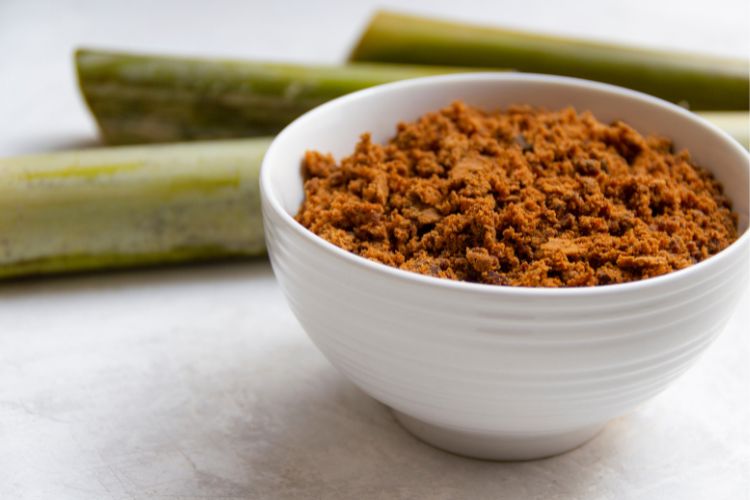

In a world chasing faster food and factory-made sweetness, some traditions still flow slowly and meaningfully. Palm jaggery is one such example. Beyond its rich taste and earthy aroma, it carries stories of rural livelihoods, seasonal rhythms, and skills passed down quietly through generations. Choosing it isn’t just about health; it’s about sustaining people and practices.
When you buy palm jaggery, you’re participating in an age-old rural economy where patience, climate knowledge, and craftsmanship matter more than machines.
A Craft Rooted in Rural India
Palm jaggery production is deeply tied to village life, especially in eastern and southern India. Farmers tap date palm or palmyra trees early in the morning, collecting sap before sunrise to preserve its purity. This work is seasonal, physically demanding, and highly skilled—often learned by watching elders rather than from manuals.
According to reinterpreted insights from ICAR.gov.in, non-industrial agro-products like palm-based sweeteners play a key role in supporting smallholder farmers by diversifying income beyond traditional crops.
How Palm Jaggery Directly Supports Farmers?
Unlike refined sugar, palm jaggery doesn’t rely on large factories or middle-heavy supply chains. Most of the value stays close to the source.
- Fairer earnings: Farmers and tappers earn more per unit compared to selling raw sap.
- Local employment: Collection, boiling, molding, and packaging all create village-level jobs.
- Low input costs: Minimal chemicals and machinery reduce dependency on loans.
For many rural families, jaggery season helps fund education, healthcare, and household needs—quietly stabilizing village economies.
Preserving Traditional Knowledge
Skills That Can’t Be Automated
The quality of palm jaggery depends on judgment calls—when to stop boiling, how to skim impurities, and how weather affects texture. These decisions aren’t standardized. They come from experience, intuition, and years of trial and error.
As noted in a reworded cultural agriculture study from FAO.org, traditional food practices help preserve biodiversity and indigenous knowledge systems that modern agriculture often overlooks.
Community Over Convenience
Jaggery-making is rarely a solo effort. Families and neighbors share tasks, equipment, and time. This cooperative approach strengthens social ties—something industrial food systems can’t replicate.
The Role of Conscious Consumers
Modern buyers play a bigger role than they realize. When people choose to buy organic jaggery online, they help create steady demand that encourages farmers to continue traditional production instead of switching to faster, less sustainable alternatives.
This demand also pushes sellers to maintain authenticity, transparency, and fair sourcing closing the gap between rural producers and urban kitchens.
Why Palm Jaggery Is Environmentally Gentle?
- No intensive irrigation or monoculture farming
- Minimal chemical use compared to sugarcane
- Trees remain productive for decades
Palm trees coexist well with surrounding crops, making jaggery production a low-impact, long-term livelihood rather than an extractive one.
FAQs
1. Is palm jaggery made entirely by hand?
Mostly yes. While basic tools are used, the process relies heavily on manual skill and experience.
2. Does buying palm jaggery really help farmers?
Yes. It creates direct demand for their produce and reduces reliance on exploitative middlemen.
3. Is palm jaggery healthier than refined sugar?
It is less processed and retains trace minerals, making it a more natural alternative when consumed in moderation.
4. Why is palm jaggery seasonal?
Sap collection depends on weather and tree cycles, making production naturally limited to certain months.
Final Thoughts
Palm jaggery isn’t just a sweetener it’s a living connection between rural hands and modern homes. Every purchase supports farmers who choose tradition over shortcuts, sustainability over scale. In a small but meaningful way, that choice helps keep India’s rural heritage alive.