
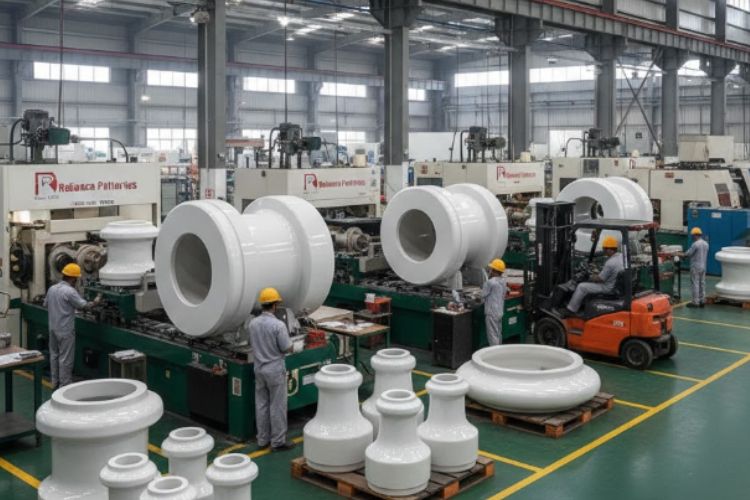

Step inside any high-voltage substation and you’ll notice something quietly doing the heavy lifting—porcelain bushings. They don’t buzz or blink, yet they are essential for safely channeling electricity through grounded barriers. Without them, transformers and switchgear would struggle to function reliably. That’s why choosing the right manufacturer is far from a minor detail.
Across fast-growing power networks, demand for dependable components has surged. In India especially, Electrical Insulator Manufacturers in India are playing a pivotal role in modernizing substations and strengthening transmission infrastructure. With renewable integration and grid expansion accelerating, quality porcelain bushings are no longer optional—they’re mission-critical.
Also Read: Industrial Heat Loss: How Advanced Insulators Solve It
Why Porcelain Bushings Matter in Substations
A substation bushing acts as a bridge. It allows high-voltage conductors to pass safely through grounded transformer tanks or walls while maintaining electrical insulation. Think of it like a well-engineered tunnel through a mountain—precise, strong, and built to endure pressure.
According to the International Energy Agency (IEA.org), global electricity demand continues to grow steadily each year, placing enormous stress on transmission and distribution systems. Substations, as the backbone of grid stability, must rely on components designed for decades of service life.
Key Functions of Substation Bushings
- Electrical insulation: Prevents current leakage and flashovers in high-voltage environments.
- Mechanical support: Holds conductors securely, even during vibration or short-circuit events.
- Environmental resistance: Withstands heat, humidity, pollution, and extreme weather.
It’s a deceptively simple component—but the engineering behind it is anything but simple.
What Sets Reliable Manufacturers Apart?
Not all porcelain bushings are created equal. Experienced Porcelain Bushing Manufacturers understand that consistency in raw materials, firing temperatures, and glaze application can make or break performance.
Here’s what seasoned buyers typically evaluate:
- Material Quality: High-grade porcelain with uniform density reduces internal voids and microcracks.
- Testing Standards: Routine power-frequency tests, impulse voltage tests, and mechanical load checks.
- Customization Capabilities: Ability to manufacture bushings tailored to transformer ratings and site conditions.
The U.S. Department of Energy (energy.gov) highlights that grid reliability depends heavily on durable transmission components. A single failure inside a transformer can result in costly downtime. That’s why reputable manufacturers invest heavily in R&D and quality control.
Engineering for High-Voltage Performance
In high-voltage substations—132kV, 220kV, or higher—design precision becomes even more critical. Manufacturers focus on creepage distance, glaze finish, and shed profile to reduce contamination-related flashovers. In coastal or industrial zones, where pollution levels are high, these design tweaks are essential.
Modern Manufacturing Advantages
- Advanced kiln firing for uniform vitrification
- Computer-aided design for dimensional accuracy
- Rigorous routine and type testing before dispatch
Interestingly, companies that are also Manufacturers of Cylindrical Support Insulators for ESP often bring additional ceramic engineering expertise. Their experience with electrostatic precipitator systems strengthens their ability to design components that tolerate both electrical and thermal stress.
Choosing the Right Partner for Long-Term Value
When utilities or EPC contractors source high-voltage bushings, cost is obviously a factor—but it shouldn’t be the only one. Long-term reliability, technical support, and compliance with IEC standards matter just as much.
Here’s a practical checklist industry buyers often use:
- Does the manufacturer comply with international standards like IEC or IS?
- Are in-house testing facilities available?
- Is there a proven track record in transformer bushing supply?
- Can they handle bulk orders without compromising quality?
Substation equipment is built to last 25–40 years. In that context, selecting a dependable porcelain insulator supplier becomes a strategic decision rather than a transactional one.
FAQs
1. What voltage levels are porcelain bushings typically used for?
They are commonly used from medium voltage levels (11kV) up to extra-high voltage applications exceeding 400kV, depending on design and insulation requirements.
2. Why is porcelain preferred over polymer in substations?
Porcelain offers excellent mechanical strength, long service life, and proven resistance to UV and environmental degradation, making it ideal for heavy-duty substation environments.
3. How long do substation bushings typically last?
With proper installation and maintenance, high-quality porcelain bushings can last several decades, often matching the lifespan of transformers.
4. What tests ensure bushing reliability?
Routine dielectric testing, impulse voltage testing, thermal stability checks, and mechanical load tests help confirm performance before deployment.
Also Read: Leading the Charge: Top Electrical Insulator Companies Enhancing Power Safety
Final Thoughts
In the vast ecosystem of power transmission, porcelain bushings may seem modest—but they are foundational to safe and stable electricity flow. Partnering with experienced manufacturers ensures substations operate smoothly, withstand environmental stress, and deliver uninterrupted power for years to come. Sometimes, reliability really does come down to the smallest details.
Blog Development Credits
This article was thoughtfully developed by Reliance Potteries. It was researched and drafted with the assistance of advanced AI platforms, then carefully refined and SEO-optimized by Reliance Potteries for accuracy and impact.