
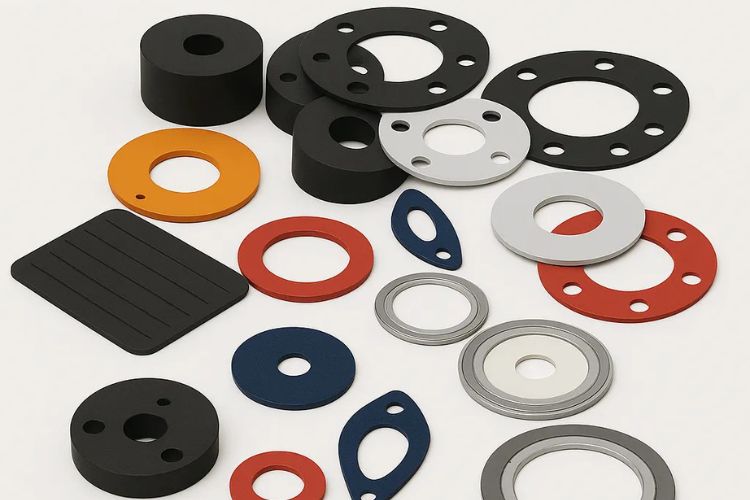

Walk into any refinery, power plant, or processing unit and you’ll find one small component doing a very big job gaskets. They rarely get attention until something leaks. And when it does, everyone suddenly remembers how critical they are. Choosing the right gasket isn’t guesswork; it’s engineering. That’s why working with a reliable industrial gasket supplier Saudi Arabia can make all the difference in safety, efficiency, and cost control.
In this guide, we’ll explore the most common types of industrial gaskets, where they’re used, and why material selection matters more than most people think.
Why Industrial Gaskets Matter More Than You Think?
At its core, a gasket is a mechanical seal. It fills the space between two mating surfaces often flanges to prevent leakage of liquids or gases under compression. According to the U.S. Environmental Protection Agency (EPA), equipment leaks are among the leading causes of fugitive emissions in industrial plants (epa.gov). A poorly selected gasket can mean product loss, safety hazards, and environmental penalties.
In high-pressure piping systems, even a millimeter-level gap can cause failure. That’s why industries such as oil & gas, petrochemicals, water treatment, and power generation invest heavily in proper gasket materials and sealing solutions.
Different Types of Industrial Gaskets
1. Non-Metallic (Soft) Gaskets
These are made from materials like rubber, compressed fiber, PTFE (Teflon), and graphite. They are commonly used in low to moderate pressure applications.
- Rubber gaskets – Ideal for water lines and HVAC systems due to flexibility.
- PTFE gaskets – Excellent chemical resistance, widely used in chemical processing plants.
- Graphite gaskets – Withstand high temperatures, often found in steam systems.
Soft gaskets are popular because they conform easily to flange imperfections. However, they may not perform well under extreme pressure.
2. Metallic Gaskets
When the pressure rises and temperatures soar, metallic gaskets step in. These are commonly used in refineries and power plants.
- Ring Type Joint (RTJ) gaskets – Designed for very high-pressure pipelines.
- Corrugated metal gaskets – Provide durability with added sealing flexibility.
Metal gaskets are durable but require precise installation and surface finishes. They’re not forgiving if alignment is off.
3. Semi-Metallic Gaskets
This is where performance meets versatility. Semi-metallic gaskets combine metal strength with soft sealing materials.
- Spiral wound gaskets – Common in oil & gas flanged connections.
- Kammprofile gaskets – Offer superior sealing under fluctuating loads.
If you’re sourcing from a trusted flange gasket supplier Saudi Arabia, spiral wound gaskets are often recommended for critical pipeline systems because they handle both pressure and temperature variations exceptionally well.
Choosing the Right Gasket: Practical Considerations
There’s no “one-size-fits-all” solution. Selection depends on:
- Operating temperature and pressure
- Chemical compatibility
- Flange surface finish
- Bolt load and compression requirements
For example, in desalination plants across Saudi Arabia, PTFE gaskets are commonly used due to their corrosion resistance. Meanwhile, upstream oil installations may rely on RTJ metallic gaskets to handle extreme pressure.
Installation also plays a critical role. Even the best gasket fails if improperly torqued. If you’re dealing with recurring leaks, you may want to read How to Prevent Leakage in Bolted Pipe Connections? for practical field-level insights.
Common Industrial Applications
Industrial gaskets are everywhere, but here’s where they matter most:
- Oil & Gas Pipelines – High-pressure and high-temperature sealing.
- Power Generation Plants – Steam and turbine systems.
- Water Treatment Facilities – Chemical-resistant sealing.
- Manufacturing Units – Hydraulic and compressed air systems.
According to the American Society of Mechanical Engineers (ASME), proper sealing components significantly reduce system failure risks when compliant with standards like ASME B16.20 (asme.org). This highlights why certified industrial sealing solutions are non-negotiable in regulated sectors.
FAQs
1. What is the most commonly used industrial gasket?
Spiral wound gaskets are widely used in oil, gas, and petrochemical industries due to their ability to handle high pressure and temperature variations.
2. How do I know which gasket material is right?
You must evaluate operating temperature, pressure, and chemical exposure. Consulting an experienced gasket manufacturer or supplier ensures accurate material selection.
3. Why do gaskets fail?
Common causes include improper installation, over-tightening, incompatible materials, and flange surface damage.
4. Are metallic gaskets better than rubber ones?
Not necessarily. Metallic gaskets are suited for extreme conditions, while rubber gaskets are ideal for low-pressure systems. The application determines the best choice.
Final Thoughts
Industrial gaskets may look simple, but their role is critical. From preventing hazardous leaks to ensuring regulatory compliance, they quietly protect entire systems. Selecting the right type whether metallic, non-metallic, or semi-metallic requires understanding your operational environment. When in doubt, partner with experts who understand industrial piping systems and flange connections inside out.